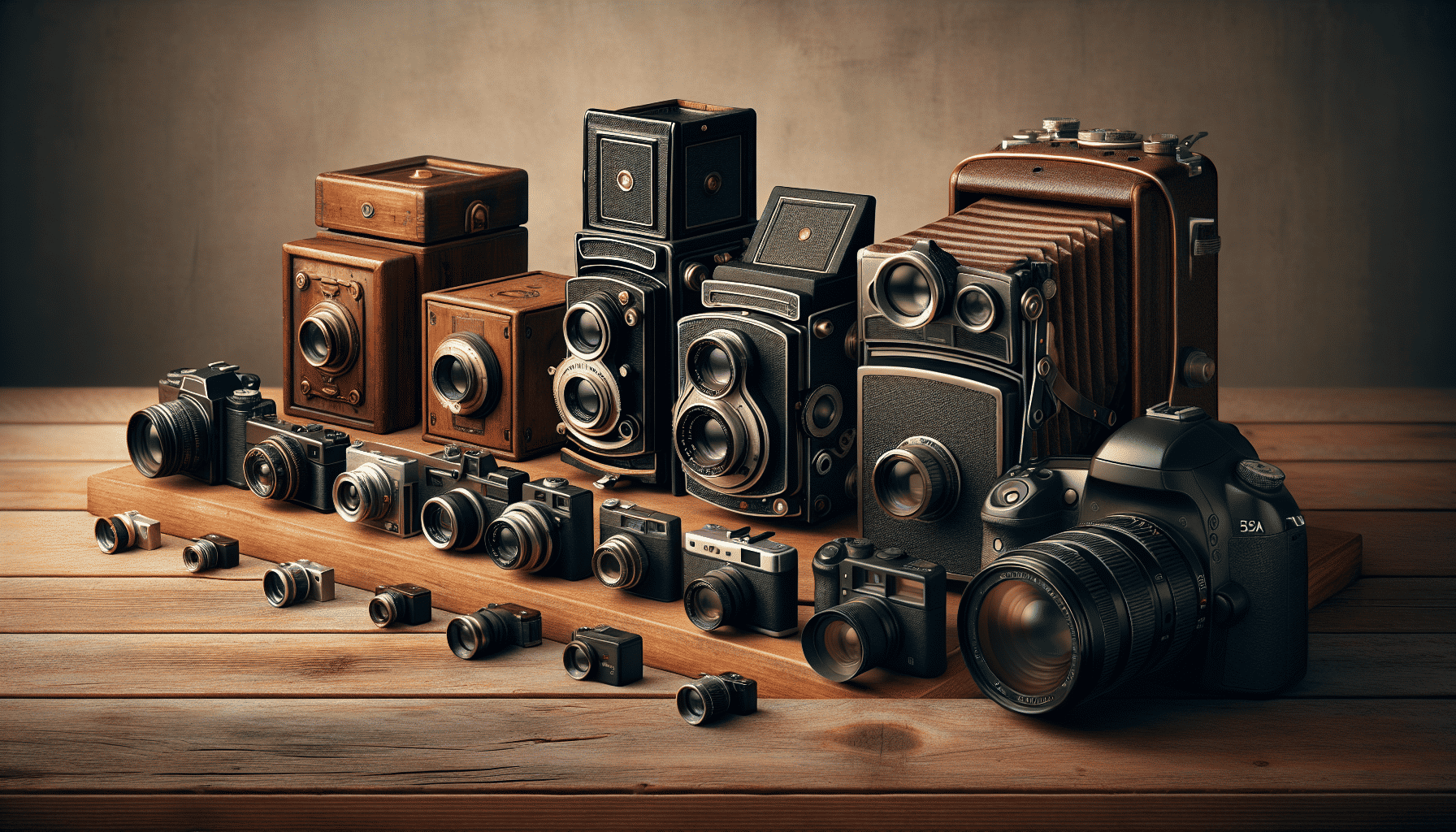
The journey of camera technology is a remarkable tale of innovation and ingenuity that has profoundly transformed our ability to capture and share the world around us. From the early days of the camera obscura to the sophisticated digital devices we use today, this evolution reflects human curiosity and the relentless pursuit of capturing moments creatively and authentically.
In the early 19th century, the concept of photography began with the advent of the camera obscura, a simple device used to project images onto surfaces. The idea of preserving these images paved the way for the invention of the first photographic processes. In 1826, Joseph Nicéphore Niépce took the first permanent photograph using a process called heliography, with an exposure time of several hours.
This pioneering approach was further refined by Louis Daguerre, who introduced the daguerreotype in 1839, significantly reducing exposure times and producing clearer images. Meanwhile, in England, William Henry Fox Talbot developed the calotype, which utilized paper negatives and contributed to the evolution of modern photography. These breakthroughs opened the door for photography to expand beyond the reach of the scientific community and into the realm of art and daily life.
The 20th century marked a period of rapid technological advancement, starting with the introduction of color photography. The Autochrome Lumière process, introduced in 1907, made it possible to capture vibrant, realistic colors, revolutionizing the medium. As cameras became more compact and portable, they enabled users to capture spontaneous moments with ease. The development of the 35mm film format in the 1920s further revolutionized photography by allowing the design of smaller, more user-friendly cameras.
The rise of digital photography in the late 20th century heralded a new era in capturing images. The first digital cameras debuted in the 1980s, leveraging digital sensor technology to convert light into electronic signals. This innovation allowed photographers to snap images efficiently and review them instantly. As technology advanced, digital cameras became more accessible, and smartphones integrated highly capable cameras, democratizing photography on an unprecedented scale.
Today, digital cameras and smartphones are equipped with high-resolution sensors, advanced autofocus capabilities, and sophisticated software that allows for image editing and enhancement. Features like optical zoom, low-light sensitivity, and AI-powered scene recognition have turned photography into an accessible art form for amateur and professional photographers alike.
Furthermore, the convergence of photography with internet connectivity has transformed how images are shared and consumed. Social media platforms have become modern galleries, where photography is a language of its own, enabling people to connect with global audiences in real time.
In just two centuries, the evolution of camera technology has redefined how people perceive the world, communicate stories, and cherish memories. As technology continues to advance, the future of photography promises to bring even more innovation, enhancing our ability to capture the beauty and complexity of life in ever more vivid and creative ways. From its humble beginnings to its digital transformation, the journey of camera technology reflects the enduring human desire to freeze time and explore the endless possibilities of visual expression.